Your gut bacteria are hungry—and what you feed them matters. Two of the most powerful tools for cultivating a healthy microbiome are polyphenols and fiber. Together, they create the conditions for beneficial bacteria to thrive while keeping harmful species in check.
What Are Polyphenols?
Polyphenols are plant compounds that give fruits, vegetables, and other plant foods their vibrant colors. They're powerful antioxidants with anti-inflammatory properties—but their benefits go far beyond that.
Here's the fascinating part: most polyphenols aren't absorbed in your small intestine. Instead, they travel to your colon where your gut bacteria ferment them, producing beneficial compounds called postbiotics. In return, polyphenols act as "fertilizer" for beneficial bacteria, helping them grow and flourish.
Meet Akkermansia: A Keystone Species
One of the most important beneficial bacteria in your gut is Akkermansia muciniphila. This remarkable microbe:
- Maintains the integrity of your gut lining
- Supports healthy metabolism and blood sugar regulation
- Is associated with healthy body weight
- Produces beneficial short-chain fatty acids
- Helps regulate inflammation
Research shows that people with metabolic issues, obesity, and inflammatory conditions often have lower levels of Akkermansia. The good news? Polyphenol-rich foods have been shown to increase Akkermansia populations in the gut.
Other Beneficial Strains Fed by Polyphenols
Polyphenols don't just support Akkermansia—they help cultivate a diverse, healthy microbiome by nourishing:
- Bifidobacteria — important for immune function, vitamin production, and keeping harmful bacteria at bay
- Lactobacillus species — support digestion, produce lactic acid, and help maintain gut barrier function
- Faecalibacterium prausnitzii — a major butyrate producer with powerful anti-inflammatory effects
The Best Polyphenol-Rich Foods
The most accessible and delicious sources of polyphenols include:
Berries
Berries are polyphenol powerhouses—and they're easy to find and enjoy:
- Strawberries — widely available, delicious fresh or frozen, rich in anthocyanins
- Blueberries — one of the best studied berries for brain and gut health
- Wild blueberries — even higher in polyphenols than cultivated varieties (find them frozen)
- Cranberries — particularly beneficial for urinary tract and gut health
Pomegranate
Pomegranate and pomegranate juice contain unique polyphenols called ellagitannins. When your gut bacteria ferment these compounds, they produce urolithins—powerful metabolites that support mitochondrial health and longevity. Pomegranate has been specifically shown to increase Akkermansia levels.
Green Tea
Green tea is rich in catechins, particularly EGCG (epigallocatechin gallate). These polyphenols support beneficial gut bacteria while having antimicrobial effects against harmful species. Even one to two cups daily can make a difference.
Cocoa and Dark Chocolate
Good news for chocolate lovers: cocoa is one of the most concentrated sources of polyphenols. The flavanols in cocoa support Bifidobacteria and Lactobacillus growth. Choose dark chocolate (70% cacao or higher) or raw cacao powder to maximize benefits. If you're looking for a chocolate recipe with extra health benefits, try my Adaptogenic Chocolate Cups.
Olives and Extra Virgin Olive Oil
The polyphenols in olives and extra virgin olive oil—including oleuropein and hydroxytyrosol—have been shown to beneficially modify the gut microbiome. Use extra virgin olive oil as your primary cooking and dressing oil to get these benefits daily. One tip: keep cooking temperatures at or below 350°F to preserve those delicate polyphenols—save the high-heat cooking for more stable fats like avocado oil.
Other Accessible Sources
- Red grapes and red wine (in moderation) — contain resveratrol
- Apples — especially with the skin, rich in quercetin
- Cherries — particularly tart cherries
- Red onions — high in quercetin
- Purple cabbage — anthocyanin-rich
- Coffee — actually one of the top polyphenol sources in the Western diet
- Herbs and spices — cloves, peppermint, star anise, oregano, rosemary
The Fiber Connection
While polyphenols feed certain beneficial bacteria, fiber provides the foundation for a healthy microbiome. Different types of fiber support different bacterial species:
- Prebiotic fibers — found in garlic, onions, leeks, asparagus, and Jerusalem artichokes—specifically feed Bifidobacteria
- Resistant starch — found in cooked and cooled potatoes, green bananas, and legumes—feeds butyrate-producing bacteria
- Soluble fiber — found in oats, apples, and flaxseeds—creates a gel-like environment that benefits many species
- Insoluble fiber — found in vegetables and whole grains—provides bulk and habitat for bacteria
Aim for diversity: the more varied your fiber intake, the more diverse and resilient your microbiome becomes.
Dragon Fruit: A Gut Health Superstar
Dragon fruit (pitaya) deserves special mention as a fiber-rich fruit with unique benefits for gut health:
- Prebiotic fiber — dragon fruit contains oligosaccharides, a type of prebiotic that specifically feeds beneficial Bifidobacteria and Lactobacillus
- High fiber content — one cup provides about 7 grams of fiber, supporting healthy digestion and regular bowel movements
- Gut lining support — the small black seeds contain healthy fats that help nourish the intestinal lining
- Antioxidants — rich in betalains (especially in red-fleshed varieties) and vitamin C, which help reduce gut inflammation
- Hydration — its high water content supports healthy digestion
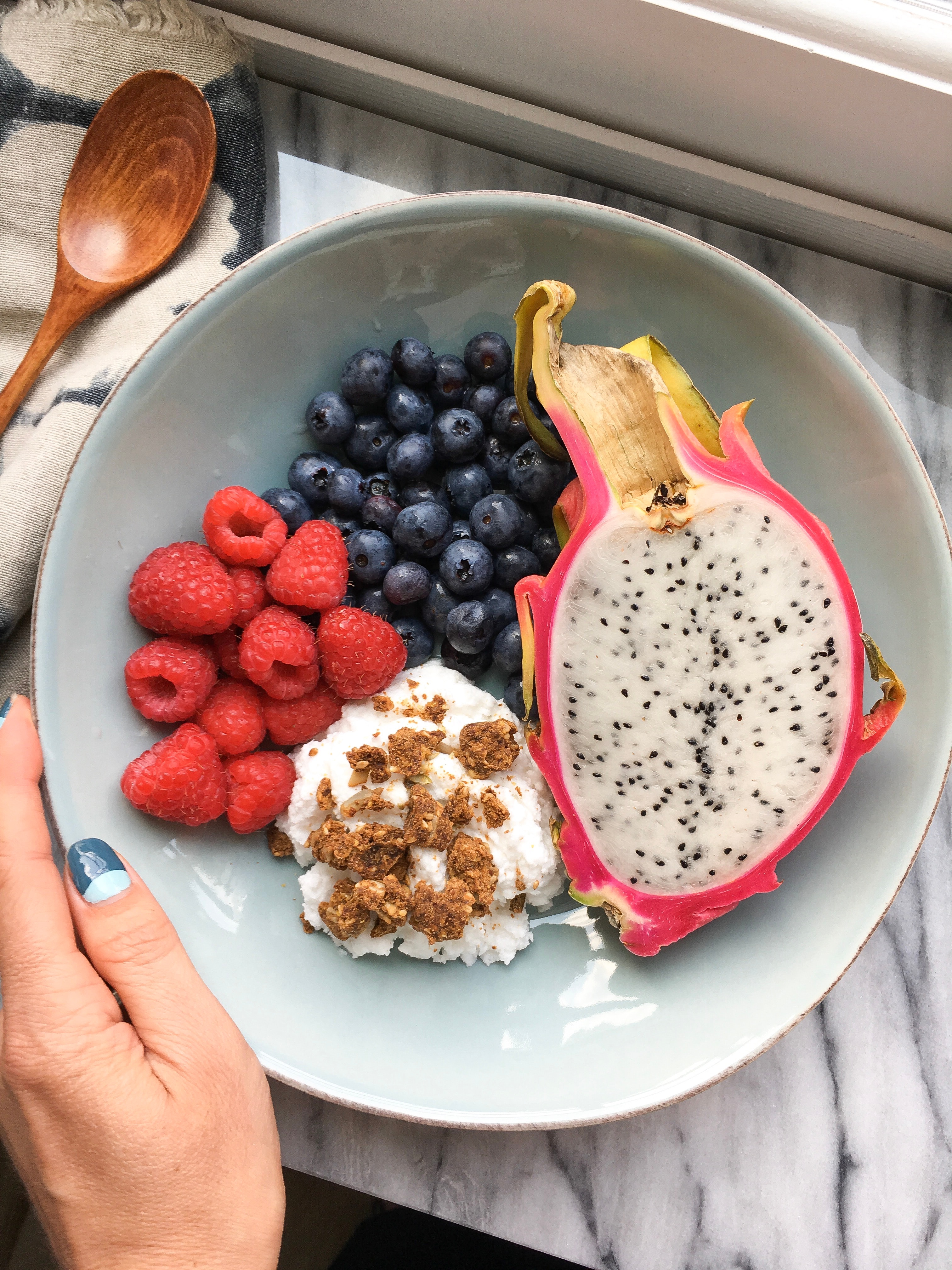
Dragon fruit is becoming more widely available in grocery stores—look for it fresh or frozen. It has a mild, slightly sweet flavor that works beautifully in smoothies, yogurt bowls, or eaten on its own.
Prebiotics vs. Probiotics: What's the Difference?
You've likely heard both terms, but understanding the difference helps you support your gut more effectively:
Prebiotics: Food for Your Bacteria
Prebiotics are types of fiber and compounds that your body can't digest—but your beneficial gut bacteria can. They serve as "fertilizer" for the good bugs already living in your gut. Prebiotic foods include:
- Garlic, onions, leeks, and shallots
- Asparagus and Jerusalem artichokes
- Bananas (especially slightly green ones)
- Oats and barley
- Apples and flaxseeds
- Dragon fruit and other high-fiber fruits
The polyphenols we've discussed throughout this article also act as prebiotics, feeding beneficial species like Akkermansia and Bifidobacteria.
Probiotics: Live Beneficial Bacteria
Probiotics are live microorganisms—actual bacteria and yeasts—that you consume to add beneficial species directly to your gut. The best sources are fermented foods:
- Yogurt — look for "live and active cultures" on the label. Coconut yogurt and other dairy-free options can be excellent choices, often containing Lactobacillus and Bifidobacterium strains
- Kefir — a fermented milk drink with a diverse array of probiotic strains
- Sauerkraut — raw, unpasteurized sauerkraut (found in the refrigerated section) is rich in Lactobacillus
- Kimchi — Korean fermented vegetables with powerful probiotic benefits
- Kombucha — fermented tea containing beneficial bacteria and yeasts
- Miso and tempeh — fermented soy products with probiotic properties
Why You Need Both
Think of it this way: probiotics are like planting seeds in a garden, while prebiotics are the fertilizer that helps those seeds grow. For the best results, include both in your diet regularly. When you eat probiotic-rich yogurt topped with prebiotic-rich berries and fiber-filled dragon fruit, you're giving your gut the complete package it needs to thrive.
Putting It Together
Building a gut-supportive diet doesn't have to be complicated:
- Add berries to your breakfast — fresh or frozen on yogurt, oatmeal, or in smoothies
- Include fermented foods daily — yogurt, kefir, sauerkraut, or kimchi
- Drink green tea — one to two cups daily
- Use extra virgin olive oil — as your primary fat for cooking and dressings
- Enjoy dark chocolate — a square or two as a daily treat
- Eat the rainbow — colorful produce means diverse polyphenols
- Include prebiotic foods — garlic, onions, leeks, asparagus
- Add pomegranate — seeds in salads or a splash of juice
- Try dragon fruit — in smoothies, yogurt bowls, or on its own
A Note on Diversity
Research suggests that people who eat 30 or more different plant foods per week have more diverse microbiomes than those who eat fewer than 10. You don't need to overthink this—simply aim to include a variety of colorful fruits, vegetables, herbs, spices, nuts, and seeds throughout your week.
Your gut bacteria will thank you.